Choosing the right extension method isn’t just about length or volume—it’s about compatibility with your natural hair. Sew in weft hair extensions are one of the most popular professional methods today, but they don’t perform the same way on every hair type.
If you’ve ever wondered whether sew-in wefts are suitable for your hair, the answer depends largely on whether your hair is fine or thick. Understanding this difference is what separates a seamless, natural result from one that feels heavy, visible, or difficult to maintain.
This guide breaks down how sew in weft hair extensions work on fine versus thick hair, and what you should consider before booking.
What Are Sew In Weft Hair Extensions?
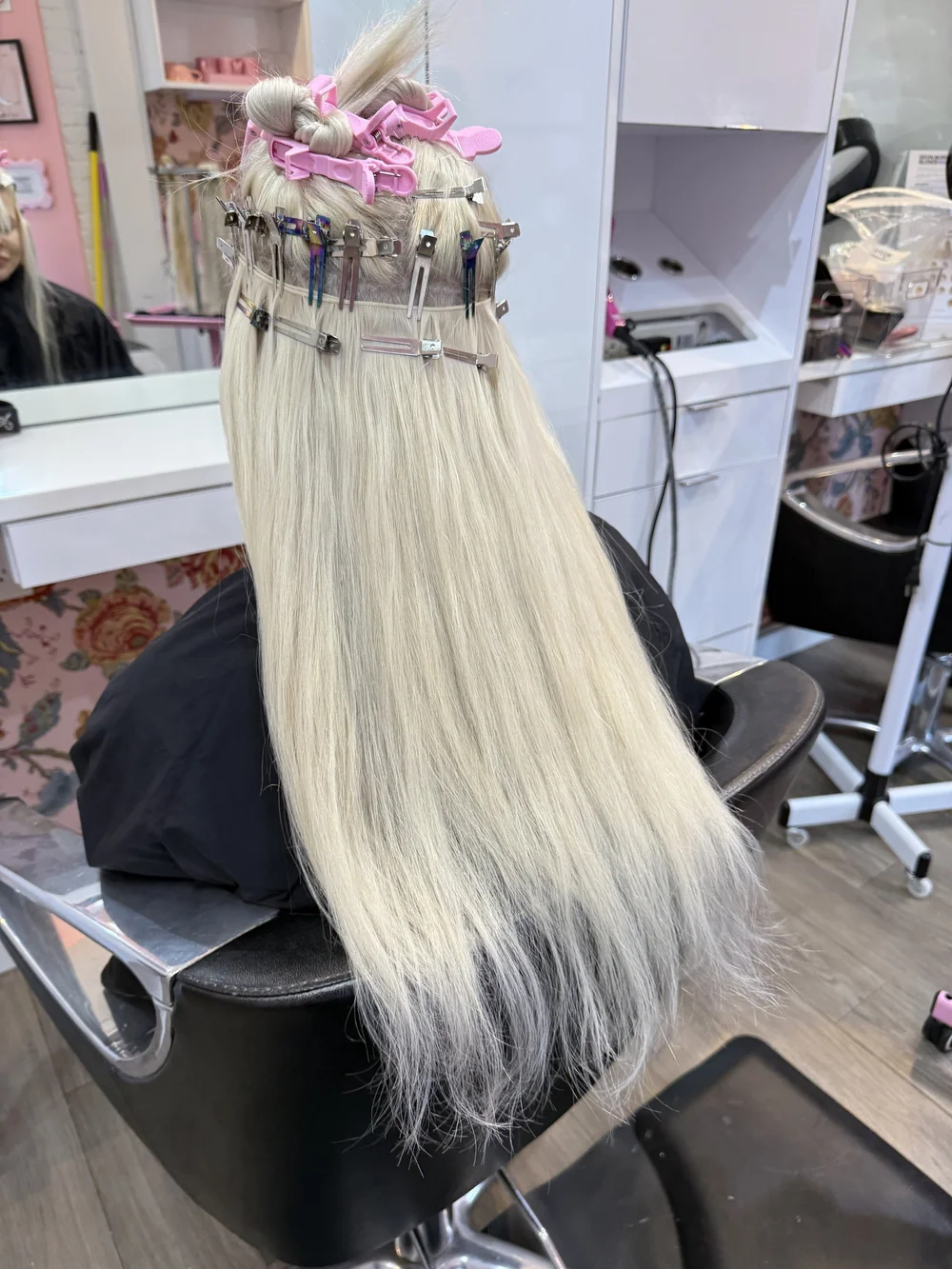
Sew in weft hair extensions involve attaching rows of hair (wefts) to your natural hair using beads or a stitched foundation. This method creates a secure base that allows for long-lasting wear and consistent volume.
Unlike temporary extensions, sew-in wefts are designed to stay in place for several weeks, making them a preferred option for clients who want a more permanent solution without daily removal.
Because the extensions are installed in rows, they distribute weight more evenly than many other methods, but that’s also why hair type matters.
Why Hair Type Matters for Sew In Weft Extensions
Not all hair can support the same amount of weight or tension. Fine hair tends to be more delicate, while thick hair can handle more density and structure.
If sew in weft hair extensions are applied without adjusting for hair type, the results can feel uncomfortable or look unnatural. For fine hair, too much weight can cause tension at the roots. For thick hair, insufficient density can make the extensions look disconnected or uneven.
That’s why customization is essential. A skilled stylist adjusts the number of rows, placement, and weight based on your natural hair.
Sew In Weft Hair Extensions for Fine Hair
Fine hair requires a more cautious and lightweight approach. While sew in weft hair extensions can work for fine hair, they must be applied strategically.
Instead of installing multiple heavy rows, stylists typically use fewer rows with lighter wefts. The goal is to enhance volume without overwhelming the natural hair.
Blending is also especially important for fine hair. Because the hair is less dense, any mismatch in thickness can make the extensions more noticeable. A proper cut and placement ensure the extensions move naturally with your hair.
For clients with very fine or fragile hair, alternative methods like tape-ins may sometimes be recommended. However, when done correctly, sew-in wefts can still be a viable option.
Sew In Weft Hair Extensions for Thick Hair
Thick hair is generally the ideal candidate for sew in weft hair extensions. Because the hair has more density and strength, it can support multiple rows and heavier wefts without strain.
This allows for:
- More dramatic length
- Fuller volume
- Stronger blending between natural hair and extensions
One of the biggest advantages for thick hair is how seamlessly the wefts can be hidden. The natural density provides coverage, making the extensions virtually undetectable when installed properly.
However, thick hair still requires precision. Without proper layering and shaping, extensions can feel bulky or sit unevenly.
Key Differences in Results: Fine vs Thick Hair
The experience of wearing sew-in wefts differs based on hair type.
Fine hair typically results in a more subtle transformation, focusing on added fullness and light length. The goal is enhancement rather than dramatic change.
Thick hair, on the other hand, allows for more noticeable transformation. Clients can achieve longer lengths and fuller styles while maintaining a natural blend.
Both results can look beautiful—but they require different approaches to achieve them.
Maintenance Considerations for Different Hair Types
Maintenance plays a major role in how well sew in weft hair extensions perform over time.
Fine hair often requires gentler care, including lighter products and careful brushing to avoid tension at the roots. Regular adjustments may be needed to keep the extensions comfortable.
Thick hair can handle more styling but may require more hydration to keep both the natural hair and extensions smooth and manageable.
In both cases, maintenance appointments every 6–8 weeks help keep the extensions secure and the blend consistent.
Choosing the Right Approach
The success of sew-in wefts doesn’t depend on the method alone—it depends on how well it’s adapted to your hair.
A professional consultation should always include:
- Evaluation of hair density and strength
- Discussion of desired length and volume
- Assessment of maintenance expectations
This ensures that the extensions are not only beautiful on day one, but also comfortable and sustainable long-term.
Final Thoughts
Bok your consultation for Sew in weft hair extensions that will work for both fine and thick hair, but the approach must be tailored to each.
Fine hair benefits from a lighter, more conservative application, while thick hair allows for fuller, more dramatic results. The key is working with a stylist who understands how to balance weight, placement, and blending.
When done correctly, sew-in wefts can enhance your natural hair in a way that feels seamless, comfortable, and easy to maintain, regardless of your hair type.