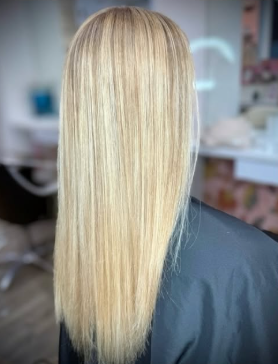
Choosing the right hair extensions in Boston isn’t just about adding length or volume, it’s about finding a method that works with your natural hair type. What works beautifully for thick hair may feel heavy or damaging on fine hair, and vice versa.
This is one of the most common reasons clients feel disappointed with extensions. It’s not the method itself, it’s the mismatch between the extension type and the hair it’s being applied to.
In a city like Boston, where weather, water quality, and lifestyle all influence how hair behaves, choosing the right extension method becomes even more important. This guide breaks down what works best for fine vs thick hair, so you can make a confident, informed decision before booking.
Why Hair Type Matters More Than You Think
Hair extensions are not one-size-fits-all. Every method, whether it’s sew-in, tape-in, or beaded, interacts differently depending on your natural hair density, strength, and texture.
Fine hair tends to be more fragile and sensitive to weight, while thick hair can support heavier extensions but may require more blending to look natural.
When extensions are not matched properly:
- Fine hair can experience tension or breakage
- Thick hair may look bulky or uneven
- Blending may feel unnatural
That’s why professional stylists focus on customizing the method, not just installing it.
Best Hair Extensions for Fine Hair in Boston
Fine hair requires a lightweight approach. The goal is to add volume and length without putting stress on the roots or making the extensions visible.
Tape-in extensions are often a preferred option for fine hair because they lie flat against the scalp and distribute weight evenly. They create a natural look without adding bulk, which is essential for thinner hair types.
Beaded row extensions can also work for fine hair, but only when applied carefully and in smaller, customized sections. The key is avoiding too much density, which can overwhelm natural strands.
In Boston, fine hair clients also need to consider environmental factors. Humidity can cause hair to expand, while winter dryness can make it more fragile. Choosing a lightweight method helps maintain comfort and long-term hair health across seasons.
Best Hair Extensions for Thick Hair in Boston
Thick hair offers more flexibility when it comes to extension methods. Because the hair can support more weight, clients often have the option to choose longer, fuller styles.
Sew-in weft hair extensions are one of the most popular choices for thick hair. They provide strong hold, even distribution, and the ability to create significant volume without compromising structure.
Beaded row extensions are also a strong option for thick hair, offering movement and flexibility while still maintaining durability.
One of the main challenges with thick hair is blending. Extensions need to be cut and layered properly so they don’t sit separately from the natural hair. This is where the skill of the stylist becomes essential.
Boston Weather and Its Impact on Different Hair Types
Boston’s climate affects fine and thick hair differently, which also impacts how extensions behave.
Fine hair tends to react quickly to humidity, becoming frizzy or flat depending on conditions. Extensions that are too heavy can make this worse. Lightweight methods help maintain balance and movement.
Thick hair, on the other hand, can become dry and heavy in winter, especially with indoor heating. Extensions that are too dense may feel harder to manage without proper hydration and maintenance.
Water quality also plays a role. Mineral buildup can affect both hair types, but fine hair may feel weighed down more quickly, while thick hair may lose shine and smoothness.
Choosing the right extension method helps reduce these environmental effects.
The Importance of Customization
The biggest mistake clients make is choosing extensions based on trends instead of suitability.
A method that looks great on someone else may not work for your hair type, density, or lifestyle. This is why consultation matters.
A skilled hair extension specialist in Boston will assess:
- Hair thickness and strength
- Scalp health
- Desired length and volume
- Daily styling habits
From there, they create a customized plan, not just install a standard set of extensions.
Maintenance Differences: Fine vs Thick Hair
Maintenance also varies depending on hair type.
Fine hair typically requires gentler handling and more frequent adjustments to avoid tension at the roots. Products need to be lightweight to avoid buildup.
Thick hair can handle more styling but often requires more hydration to keep both natural hair and extensions smooth and manageable.
In both cases, consistent maintenance appointments are key to keeping extensions looking natural and preventing damage.
Final Thoughts
When it comes to choosing the right hair extensions in Boston, your natural hair type is the most important factor. Fine hair benefits from lightweight, low-tension methods, while thick hair allows for fuller, more structured extension options.
The best results come from understanding this balance and working with a stylist who knows how to adapt techniques to your hair, not force your hair to adapt to the technique.
With the right approach, hair extensions can look seamless, feel comfortable, and hold up beautifully through Boston’s changing seasons.